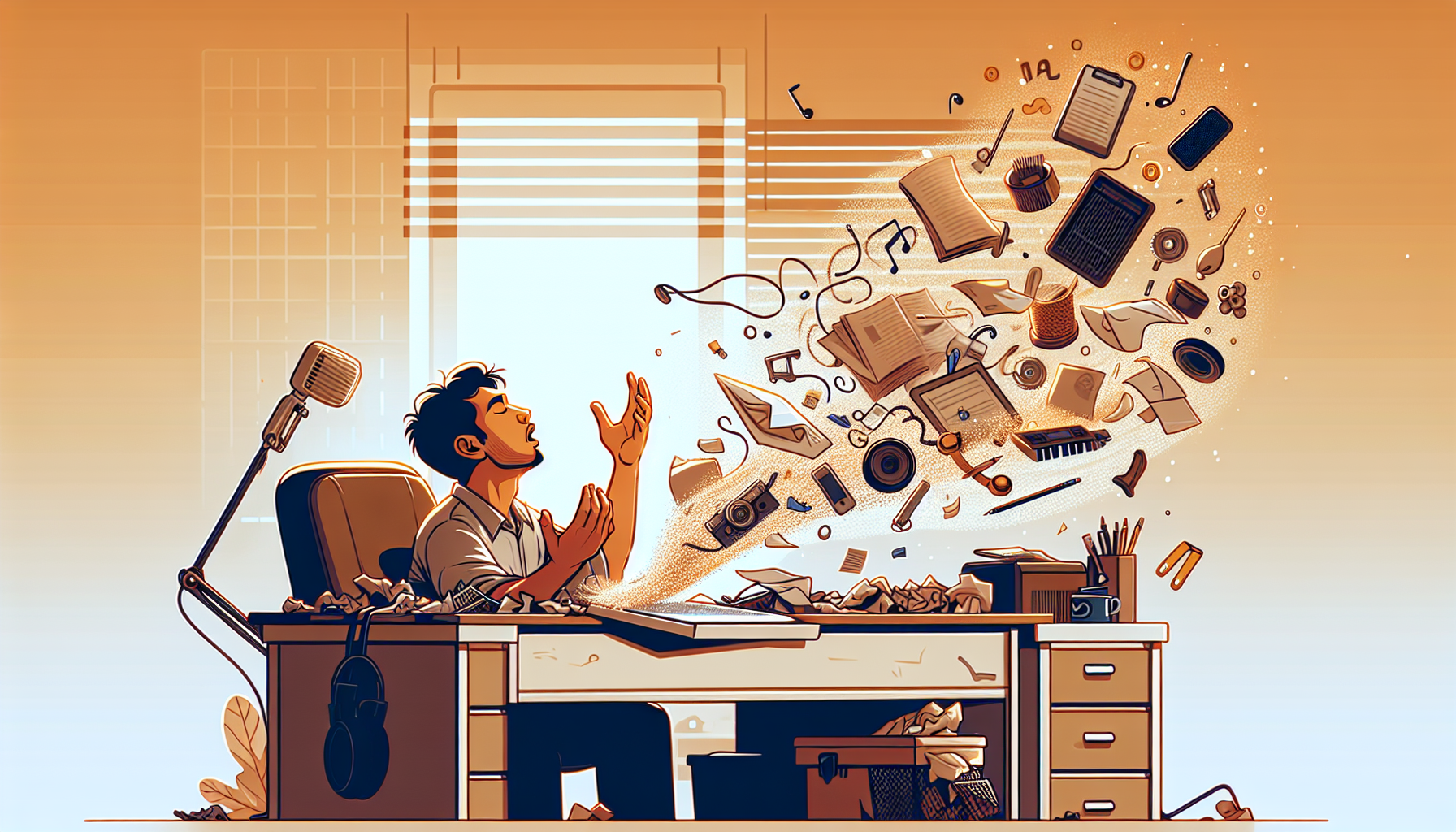
I spent years doing the same thing every week.
Recording the episode. Scrambling to find the guest's bio. Realizing I forgot to send the thank-you email. Staying up late to write show notes that I knew nobody would read if they weren't perfect.
It wasn't just work. It was a weight.
I was so busy "producing" a podcast that I was losing the very thing that made me start: the connection.
The five biggest time-sucks in podcasting aren't just technical problems. They're relationship killers.
1. The Guest Management Loop
We've all been there. Twelve emails deep into a scheduling thread, only to have the guest reschedule at the last minute.
You're not a host anymore. You're a booking agent.
We built a Podcast Relationship Management (PRM) system to fix this. Not just a database, but a way to keep the human element alive without the manual labor. It tracks everything from the first "hello" to the final "thank you."
It means you stop being a bottleneck.
2. The Content Repurposing Trap
You finish a great interview. You're high on the energy of the conversation. And then you realize the "real" work is just beginning.
Transcripts. Social posts. Blogs. Newsletters.
It’s a black hole that swallows your Saturday afternoons.
We built an engine that does the heavy lifting. It takes your transcript and turns it into assets in minutes, not hours. It’s about taking that one conversation and letting it live in ten different places at once.
3. The Show Notes Struggle
Show notes are the bridge between your audio and the search engines. But writing them feels like doing homework.
Most podcasters just skip them or do a half-hearted job.
We use AI to generate show notes with timestamps and pull quotes. You spend five minutes refining instead of fifty minutes writing from scratch.
The bridge gets built. You just walk across it.
4. The Pre-Interview Scramble
I used to show up to interviews with ten tabs open, trying to remember what my guest did three years ago.
If you're not prepared, you're just having a surface-level chat. You're not having a conversation.
Our Episode Planner V2.1 provides a structured workflow based on what we call Input-First Archetypes. It guides you through the research so you show up ready to actually listen, not just wait for your turn to speak.
5. The Post-Production Bottleneck
The "scramble" doesn't end when you hit stop.
Editing, distribution, social scheduling, it’s a million tiny tasks that add up to a mountain of friction.
The SOP Engine is how we automate the hand-offs. You record, you trigger the workflow, and the system handles the rest.
Reclaim the Conversation
Your time is an obligation. You owe it to your family, your faith, and your guests to not waste it on things a machine can do better.
PodGlue wasn't built to make you "productive." It was built to make you present.
Workflow
Podcast Workflow Automation
Move from scattered publishing tasks to one connected workflow for planning, production, content, search, and post-publish momentum.
Don’t just read the build. Shape it.
PodGlue is built from conversations with hosts, guests, producers, and agencies doing the work. What does Stop Chasing Your Own Tail look like in your workflow?
Ready to make every episode compound?
PodGlue is the operating system for relationship-driven podcasters.
Get Started FreeRelated reading
What Is Podcast Relationship Management?
Explore the concept of podcast relationship management. Learn why CRMs are ineffective for podcasters and how PodGlue offers a tailored solution.
Edit Anywhere, Land in PodGlue: Your AI Assistant Can Now Add Episodes
I edited my new trailer in another app, and the hardest part was getting it back into PodGlue. Now your AI assistant can bring a finished video into your show as a draft episode, from a link.
How I Turned 20 Podcast Episodes into a Book Manuscript in Under an Hour
I had 300+ episodes of Hacks & Hobbies sitting in a digital vault. Here’s how I finally unlocked that content and turned it into a book manuscript in 45 minutes.